How to Create a Brand Voice with AI That Sounds Like You
How to create a brand voice with AI: gather your real words, have AI write a brand voice guide with examples, then test it until it sounds like you.
Quick answer: To create a brand voice with AI, start with your real words: voice memos, emails and posts that sound like you. Ask the AI to study them and write a brand voice guide with clear rules and "sounds like me" and "never sounds like me" examples. Then test it on real tasks and correct it until it sounds like you.
The most common thing I hear from business owners about AI is some version of this: "Jesse, it sounds fake." And they're right. Out of the box, most AI writing sounds like a brochure that went to the same school as every other brochure. Polite. Smooth. Forgettable.
Here's the good news. That's not a tool problem. It's a teaching problem. If you have been searching for how to create a brand voice with AI, how to write a brand voice guide, or why your AI brand voice keeps sounding like everybody else, this is the process I use for my own brand and the one I teach in my class.
What is a brand voice?
A brand voice is the consistent way your business sounds in words: the phrases you use, the words you avoid, how long your sentences run, how warm or direct you are and what you always say at the end. It's the part of your brand people can hear.
Your voice stays the same everywhere. Your tone shifts with the moment. You sound one way thanking a new client and another way when someone is grieving, but it's still you in both rooms. Paul told the church at Colossae, "Let your speech always be with grace, seasoned with salt." That's a pretty good brand voice guide right there. Grace in the tone. Salt in the substance.
For example, in my brand, every public piece ends with "Let's build together." I say "class," never another word for it. I tell stories before I teach. Those small, steady choices are what make something sound like me instead of like a template.
Why does AI writing sound generic without a brand voice?
AI writing sounds generic without a brand voice because the assistant has no samples of you, so it falls back on the safest, most average way to say things. Give it your words and it has something better to match.
Anthropic's own prompting best practices say it plainly: treat Claude like a brilliant new employee who doesn't know your norms yet, and use examples, because examples are one of the most reliable ways to steer its tone and structure. Think about that. You wouldn't hire a new assistant, hand them nothing and then get upset that their emails don't sound like you. You'd show them a few you wrote.
How do you create a brand voice with AI step by step?
You create a brand voice with AI by gathering your real words, having the assistant describe the patterns it hears, turning that into a short written guide, testing the guide on real work and saving it where every future chat can use it.
Here's the order I'd follow this week.
- Gather your real words. Pull five to ten samples: emails you were proud of, captions, a talk or sermon transcript, a few voice memos. Spoken words are gold. Most of us sound more like ourselves out loud than on paper.
- Give them one home. Put the samples in a single workspace so you never paste them again. In Claude that's a project, which Anthropic's help center explains on its page What are projects?, and I walk through the setup in how to use Claude Projects for a small business.
- Ask it to listen before it writes. Try: "Read every sample in this project. Describe how I sound in plain words: my common phrases, sentence length, how I open, how I close and what I never do. Quote my own lines as proof. Don't write anything new yet."
- Turn that into a guide. "Now write a one page brand voice guide with six rules. For each rule, give one sentence that sounds like me and one that never would."
- Test it on three real jobs. Ask for a follow up email, a social post and a short bio using only the guide.
- Correct with reasons. Don't just say "make it better." Say "I'd never say 'valued customer.' I'd say 'friend.'" Every reason you give becomes a better rule.
- Save the final guide. Add it to your project knowledge as a file called something plain like "Voice Guide," and tell the project instructions to follow it every time.
Step six is where most people quit, and it's the step that matters most. I don't own magic wands. The first draft of your voice guide will be close but not right, and that's normal. Two or three rounds of honest corrections is usually what it takes.
Want your voice guide built in class, with me?
Build On Purpose is my 8 week live class for faith driven builders. In Session 3, Identity First, your AI brand builder makes your look and your voice, and you pick. Your voice guide is built from your own talks and writing, so it sounds like you. No coding, and a full refund if you decide it's not for you before Session 2.
What should a brand voice guide include?
A brand voice guide should include a one sentence description of how you sound, five to seven rules with examples, a list of words you use and words you never use, how you open and close, and how you talk about the hard things.
- Your voice in one sentence. Mine is close to this: warm, plain and faith first, stories before teaching, never hype.
- Rules with examples. A rule without an example is just a wish.
- Words you use. Your real phrases, the ones people already associate with you.
- Words you never use. Every brand has a few, and AI will reach for them unless you say no.
- Openers and sign offs. How you start an email, how you end a post.
- Sensitive topics. How you talk about money, faith, pricing or a mistake you made.
- Reading level. I write so a 70 year old reading on a phone never has to slow down.
What do brand voice examples look like for a small business?
Brand voice examples show the same message written in your voice and in a voice that isn't yours, so the difference is obvious. Here's one message, an appointment reminder, written three ways for three made up businesses.
- A neighborhood bakery, warm and playful: "Your cinnamon rolls will be warm and waiting at 9. Bring an appetite. We'll bring the icing."
- A tax preparer, calm and exact: "Reminder: your appointment is Thursday at 2:00 PM. Please bring last year's return and any new 1099 forms."
- A faith based life coach, encouraging and direct: "See you Thursday at 2. Come as you are. We're going to take one honest step together."
None of those is better than the others. Each one fits its people. That's the point of a brand voice. When your guide has examples like these, your AI brand voice has a target to hit instead of a guess.
How do you keep AI writing in your brand voice over time?
You keep AI writing in your brand voice by saving every correction back into the guide, adding fresh samples every few months and reading anything important out loud before it goes out.
Your voice grows. Mine has. The way I talk on my podcast today isn't how I wrote five years ago, so I keep adding new samples, like transcripts from The Jesse Wood Show. And I keep one simple rule: if I wouldn't say it out loud to the person, it doesn't get sent. Proverbs says "A word fitly spoken is like apples of gold in settings of silver." Fitly spoken. That's the bar.
Once your guide is solid, put it to work. My guide on how to write marketing copy with Claude shows how to use it for emails, posts and pages. For the rest of your brand, like your bio, look and home page, read how to use Claude to build your brand, and for the big picture, start with how to build a business with AI without being a tech person.
Frequently asked questions
Can AI find my brand voice for me?
AI can't invent your voice, but it can find the patterns in how you already talk and write. Give it real samples, ask it to describe what it hears, then correct it until the description fits you.
What is the difference between brand voice and tone?
Your brand voice is how you always sound. Your tone is how that voice adjusts to the moment, like a cheerful welcome email versus a careful reply to a complaint. The voice stays the same while the tone shifts.
How many writing samples does AI need to learn my voice?
Five to ten real samples is a good start, such as emails, captions and a transcript of you talking. A mix of written and spoken samples usually works better than one long document.
Is there a free way to create a brand voice with AI?
Yes. You can do this on the free plan of a general AI assistant. As of November 10, 2026, Claude's free plan lists up to five projects, which is enough to keep your samples and voice guide in one place.
Should my brand voice sound like how I talk?
For most small business owners and personal brands, yes. People buy from people, so a voice close to how you really talk builds trust. Clean it up for reading, but keep your real phrases.
I'm here for you. You got this. Now go build it.
Let's build together.
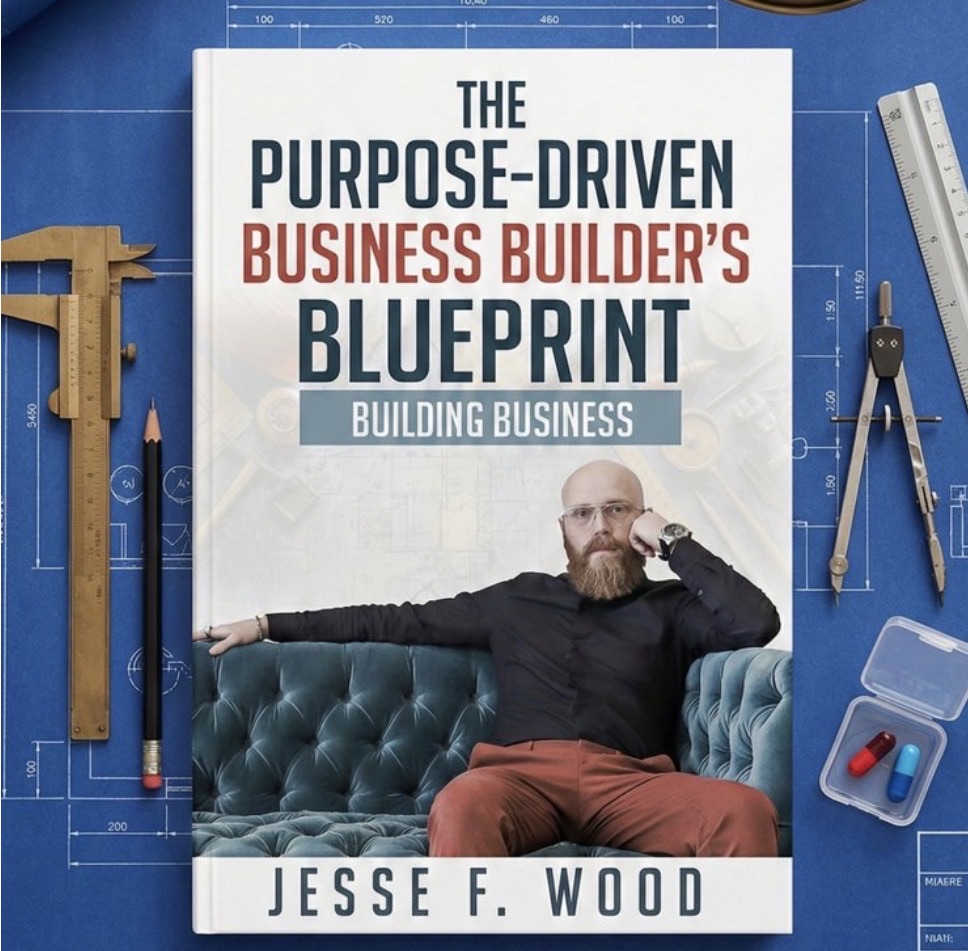
The Purpose-Driven Business Builder's Blueprint walks you through all 7 steps.